
The Room That Didn’t Decide
The first drink came to my table. The second was called from the counter while I waited.
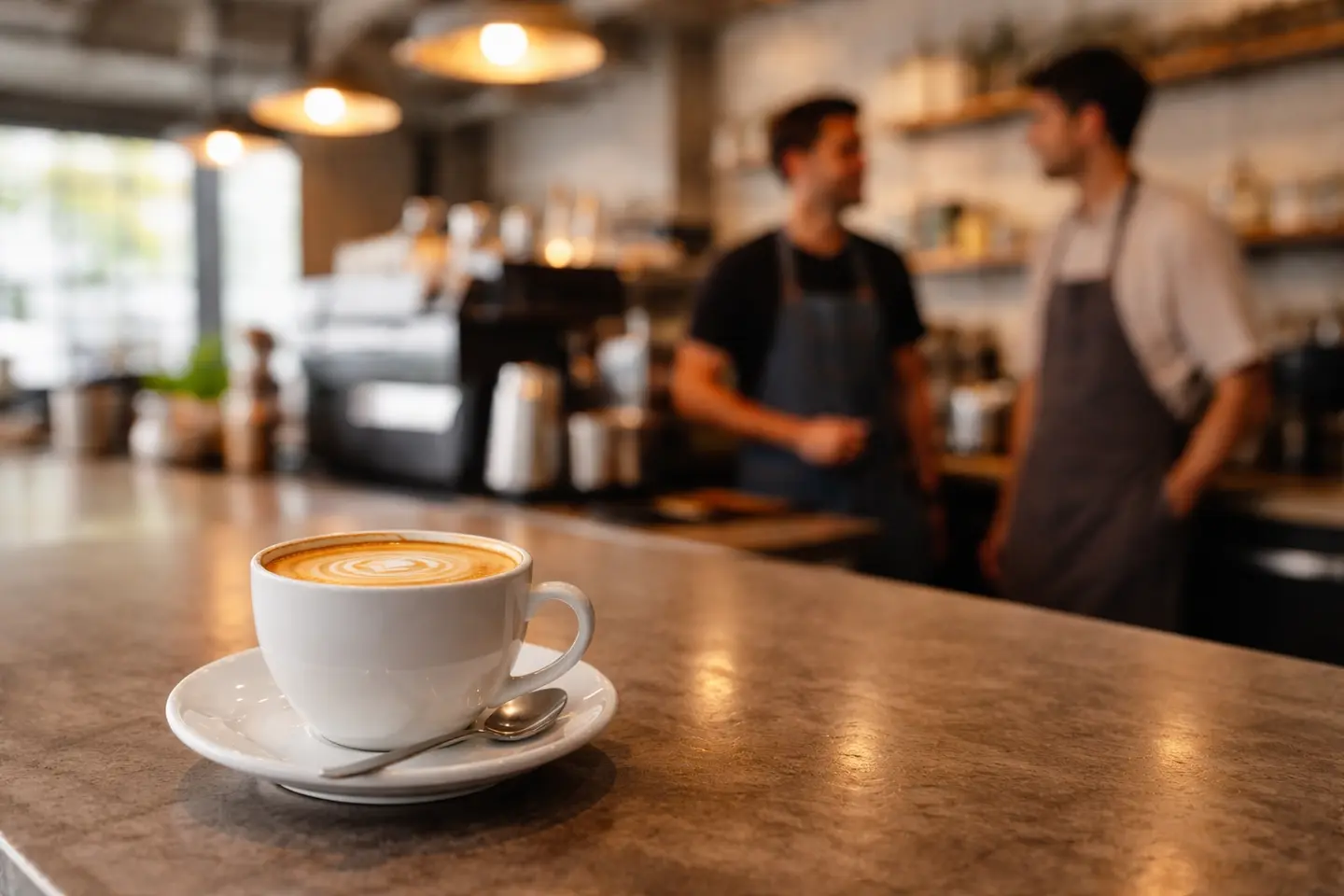
Late in the morning, I sat down in a large, light-filled café. There were long communal tables, plenty of sockets and a few people working on laptops. It wasn’t particularly busy.
I ordered a drink at the counter.
“We’ll bring it over.”
Perfect. I found a table, opened my laptop and a few minutes later the drink appeared.
About twenty minutes later, I went back for another.
Same counter, different member of staff, much the same room. I ordered, paid and returned to my laptop.
A few minutes later I heard someone calling a drink from the far end of the counter.
I carried on working.
They called it again.
Eventually, it occurred to me that it might be mine.
It was.
The walk back to the counter wasn’t exactly arduous. The interesting bit was that, without consciously realising it, I’d already learnt how this café worked.
Order here.
Sit down.
We’ll bring it over.
Except now they didn’t.
Customers learn the rules quickly
Hospitality businesses contain hundreds of little rules that nobody formally explains.
Wait here. Order there. Take a number. We’ll come to you. Collect from the end of the bar.
Most of the time, customers work them out remarkably quickly.
The first interaction is often enough.
Nobody had told me that drinks were always delivered to the table. One member of staff had simply said, “We’ll bring it over”, and that was enough for me to assume the same thing would happen twenty minutes later.
From the café’s point of view, there may never have been a rule.
From mine, there was.
Flexible service makes perfect sense
There are good reasons for changing how service works during the day.
When a café is quiet, taking drinks to tables is easy and hospitable. When six orders arrive at once and two members of staff are trying to make coffee, clear tables and serve the queue, calling drinks from the counter may make much more sense.
You probably don’t want a rigid rule requiring someone to walk a flat white across an empty room while twelve people wait to order.
Flexibility isn’t the problem.
The problem comes when the business changes mode but the customer doesn’t know it has happened.
That creates the slightly odd situation where staff and customers are following different versions of the same service.
The drink is sitting on the counter.
The customer is sitting at the table.
Both are waiting for the other one to do something.
The room can end up with two sets of rules
This gets particularly interesting when the service model isn’t actually being changed by the café at all.
It may simply vary by person.
One member of staff takes drinks over when they have time. Another routinely calls them from the counter. Both approaches are perfectly reasonable in isolation.
Together, they create a system nobody quite intended.
Regulars may barely notice. They know the place well enough to glance towards the counter or recognise which member of staff does what.
New customers don’t have that knowledge. They use whatever happened last time as their best available clue.
Which is why inconsistency often becomes most visible on the second order rather than the first.
By then, you’ve trained the customer.
Small uncertainties get in the way of easy purchases
I hesitated about ordering a third drink.
Not because I was furious about having to walk ten metres to collect the second one. There will be no angry TripAdvisor review entitled MAN FORCED TO COLLECT OWN COFFEE.
I just wasn’t entirely sure what the process was anymore.
Do I order and wait at the counter? Do I go back to my table? Does it depend on who serves me? Should I hover for a bit and see what happens?
None of these is a serious problem.
But reordering is supposed to be easy. The customer has already chosen the venue, found a table, looked at the menu and bought something once.
Ideally, buying the same thing again shouldn’t require fresh detective work.
Decide what changes, then say it
A café doesn’t need to choose between table delivery and counter collection forever.
It just needs enough consistency that the team understands what normally happens and when that changes.
Perhaps drinks are delivered when the room is quiet and collected when there’s a queue. Perhaps table delivery stops at lunchtime. Perhaps staff simply use their judgement.
Any of those can work.
But when the action expected from the customer changes, a few words at the till do an enormous amount of work.
“We’ll bring that over.”
“We’ll call you when it’s ready.”
That’s really all I needed.
And there’s a simple way to see whether the system is working. Watch what happens after people place their second order.
If customers repeatedly wait at tables for drinks sitting on the counter, or hover at the counter for drinks someone intends to bring over, they’re not failing to understand the system.
They’re showing you that the system hasn’t quite decided what it is.