
Cutting the Bill in Half
At the end of dinner, the server raised a hand and offered us a chance to halve the bill.
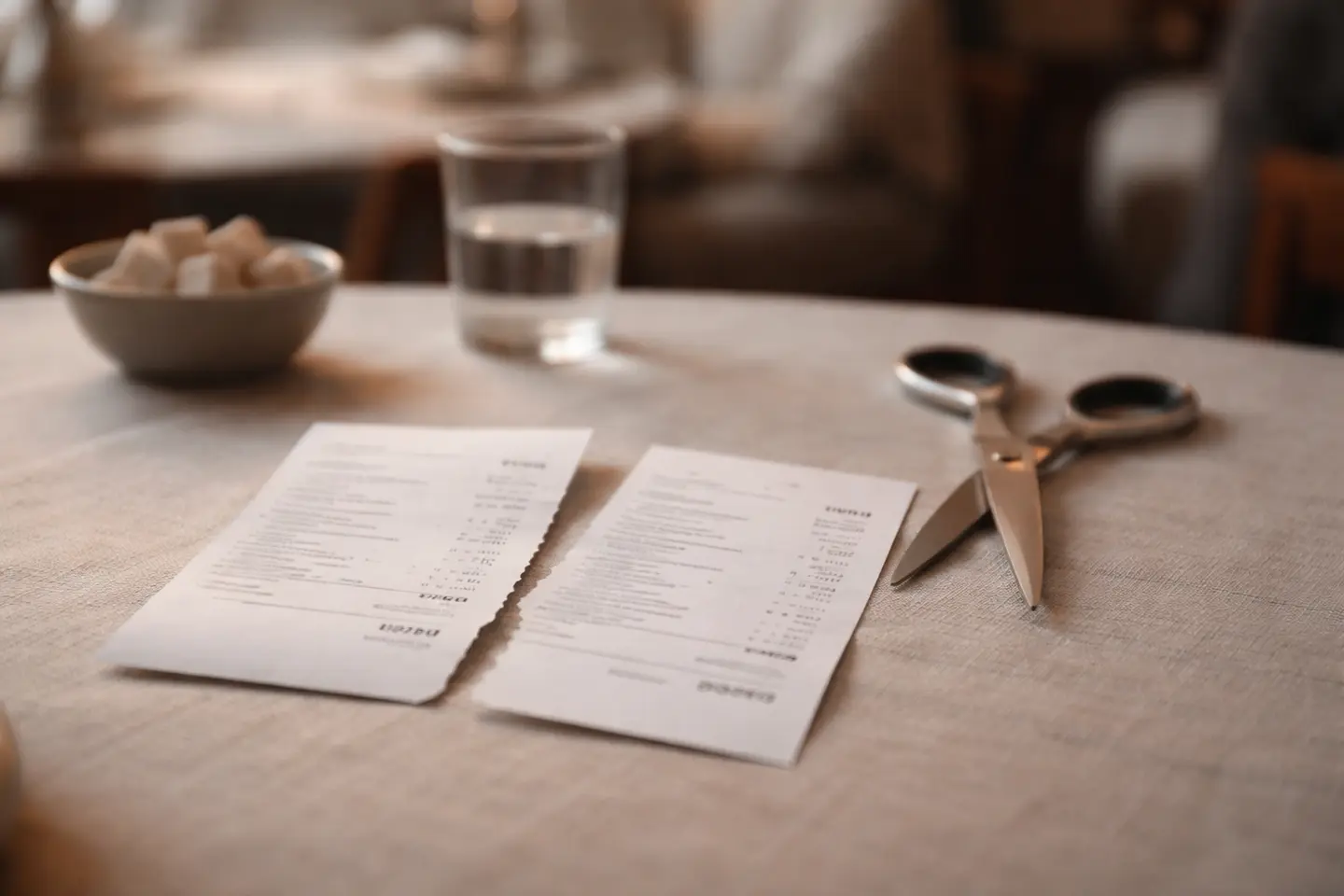
The server didn’t arrive with a dessert menu. He arrived with a grin and a raised hand.
Rock, paper, scissors.
Win, and half the bill disappears.
It was a January promotion, but it didn’t feel much like one. There was no voucher to produce, no code to remember and no awkward conversation about which bits of the menu qualified. The server explained it quickly, counted down and played.
Then the same thing happened at the next table.
And the next.
People watched. Winners celebrated considerably more than the amount of money involved probably justified. Losers protested their tactical choices. Phones appeared.
For a few seconds, paying the bill had become the most entertaining part of the meal.
Half price is not usually very interesting
January is full of restaurant offers.
Twenty per cent off. Two courses for £20. Kids eat free. Half-price food on Tuesdays. By the middle of the month, you can start to wonder whether anybody in Britain is paying full price for dinner.
There’s nothing wrong with discounting. January is difficult and operators need reasons to get people through the door.
But most discounts are purely transactional.
The restaurant gives up some money. The customer saves some money. Everybody understands the arrangement and nobody tells their friends about the thrilling moment when 20 per cent disappeared from the bottom of a receipt.
This was different.
The saving was still the reason the promotion existed, but the mechanism had given it another job.
It created a moment.
The clever bit happened at the table
The offer could easily have been advertised as “Win 50% off your bill”.
That might have helped get people through the door, but what happened once they arrived was more interesting.
The team initiated it.
Nobody had to remember to ask. Nobody had to produce an email. The server knew when to introduce it, how to explain it and how to play it without turning the end of dinner into a game-show audition.
That consistency mattered.
Something designed to feel spontaneous was actually quite structured.
The rules were understood. The timing was clear. Every table appeared to get essentially the same experience.
That’s probably why it felt fun rather than gimmicky.
A promotion people can retell
Ask someone what they paid for dinner three weeks ago and there’s a reasonable chance they won’t remember.
Ask whether they beat their waiter at rock, paper, scissors to halve the bill and you may get the entire story.
That difference is useful.
A conventional discount gives customers a financial reason to visit. Once they’ve used it, most of its work is done.
A promotion built around an experience has the possibility of travelling further. Someone films it. Someone mentions it at work. A friend asks where they went at the weekend and the answer contains a story rather than a percentage.
The restaurant had effectively made the promotion part of the product.
And it had done so with rock, paper, scissors.
No app. No wheel of fortune. No elaborate loyalty scheme.
Just something everybody already knows how to play.
The risk is making fun feel compulsory
There is, of course, another version of this idea.
The server arrives with enormous enthusiasm. You’re required to perform. There’s chanting. Perhaps a bell. Someone produces a camera.
You start wishing you’d just paid full price.
Anything playful in hospitality depends heavily on judgement. What worked here was how little was demanded of the customer. One explanation, three hand signals, a few seconds and it was over.
The team supplied the energy without requiring the guest to match it.
That’s an important distinction.
The system needs enough definition that everybody gets a fair and consistent version of the promotion, but not so much performance that staff appear to be delivering Act Three of the January Marketing Plan.
Discounts don’t have to feel like discounts
There’s a broader idea here that applies beyond this particular promotion.
When trade is soft, the obvious lever is price. Reduce it enough and, hopefully, more people come.
But before simply putting a percentage on a chalkboard, it’s worth asking whether the promotion could create something as well as remove something.
Could ordering trigger a small surprise? Could a quiet-night offer contain an element of choice or chance? Could something normally delivered as money off become a brief interaction customers actually enjoy?
Not every promotion needs a game attached to it. In many cases that would be exhausting.
But if you are already spending margin to attract customers, there’s value in thinking about what else that spend could buy.
Here, it bought a discount.
It also bought laughter around the room, phones coming out and a story that was very easy to remember.
I can’t remember what I had for dinner.
I remember the rock, paper, scissors.